Many people first encounter the term C-fold in connection with paper towels or in pop culture references, such as The Bear. In printing, however, it describes a classic paper folding style where a sheet is divided into three equal panels. This technique is widely used for brochures and mailers because it is compact and cost-effective. It’s a versatile choice that offers both functionality and a professional presentation.
Definition: C-fold
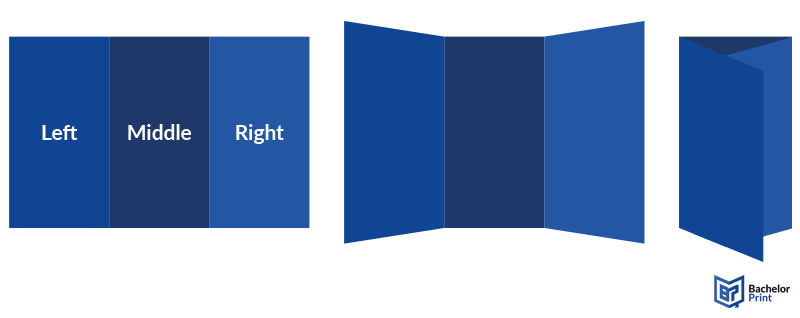
The C-fold is a paper folding method in which a sheet is divided into three equal panels and folded twice so that each panel wraps over the next. This creates a smooth, compact fold that resembles the letter “C” from the side. In printing terms, it is one of the most common formats for brochures, letters, and flyers because it keeps information organized and easy to unfold.
Outside of printing, the term C-fold is also familiar from everyday life, especially in the context of paper towels. C-fold towels are stacked flat and folded into thirds, so each towel can be pulled out individually without tearing. The concept is the same: two even folds create a layered stack.

How to C-fold
To C-fold paper, follow these steps:
- Start with a sheet of paper: Make sure it’s large enough to divide into three panels (typically, an 8.5 x 11-inch sheet works well for standard C-folds).
- First fold: Take one side of the paper and fold it towards the center, creating the first parallel fold. This will make the first panel.
- Second fold: Next, fold the other side of the paper over the first fold to create the second panel. The two folds should form the letter “C” when viewed from the side.
- Use a folding bone: After each fold, run a folding bone along the crease for smooth and crisp edges as well as a clean finish.
Note: Make sure all panels are of equal size for a clean, even fold.
This creates a compact and organized document, perfect for brochures, flyers, and other materials.
Products
You’ll often see the C-fold used in everyday print products where information needs to be structured across several panels. Because it is compact, easy to handle, and professional-looking, it fits a wide variety of applications.
Brochures & flyers
The most common use is marketing. It’s perfect for presenting services or products clearly.
Menus & invitations
Restaurants and events use C-folds to create elegant, space-saving layouts.
Price lists
A simple way for businesses to present products and services in a structured format.
Letters & self-mailers
A practical folding style for correspondence that fits standard envelope sizes.
Affordable document printing from $0.10
- Crisp text, vibrant colors & multiple paper choices
- No need to visit a shop; simply order online anytime
- Print documents, copies & reports with professional quality
Learn more!
Common uses
The C-fold is a versatile technique that shows up in various industries. Here are a few places where you’ll commonly see this folding technique in action:
A document folding method that uses two parallel folds to create six panels of roughly the same size. Also known as the letter fold or a 3-panel roll fold.
➜ Perfect for marketing materials and communication that needs to be compact and structured.
The C-fold is commonly used for paper towels in kitchens, providing a simple, efficient way to grab and use towels with minimal mess.
➜ Ideal for keeping hands clean and quickly dealing with spills or messes in high-volume environments.
Yes, the C-fold is also used for menstrual cups, and it’s a popular technique due to its simplicity and ease.
➜ The C or U shape creates a wider opening for easier insertion, but beginners may prefer the punch-down fold for more control.
Panel layout
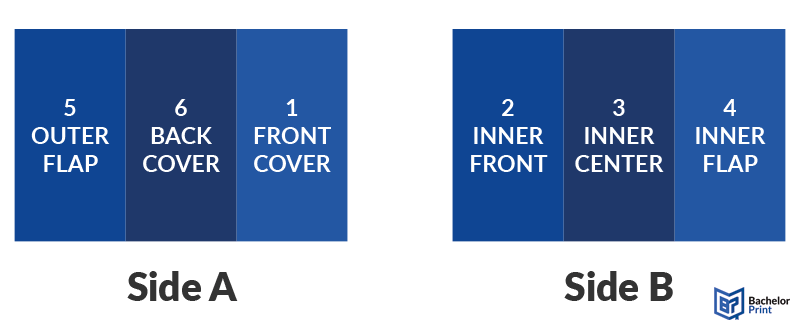
Understanding the proper reading order of a C-fold is crucial to ensuring that your content and visuals stay aligned across panels.
- Side A (read left to right): Panels 5, 6, and 1
- Side B (read left to right): Panels 2, 3, and 4
When folded
Panel number
Position
Purpose
1
Front cover
First panel the reader sees; headline, logo, or teaser image
2
Inside left
Introduction or opening section of content
3
Inside center
Main details, features, or core information
4
Inside right
Supporting content, images, or additional information
5
Outer flap
Folds inside; may feature a teaser or highlight
6
Back cover
Contact details, call-to-action, or legal information
Notes
- Panels 2, 3, and 4 are on the inside of the fold.
- Panels 1 and 6 are visible from the outside when folded.
- Panel 5 tucks neatly inside, helping the brochure maintain its compact shape.
Understanding this layout helps ensure that all sections and images are properly aligned and that the content unfolds in a clear, logical order when the C-fold is opened.
Pros & cons
The C-fold is a versatile folding method, but like any technique, it comes with both advantages and potential drawbacks. Here’s a quick overview:
Pros
- Compact & easy-to-handle format
- Organizes information with a clean look
- Simple & cheap for high-volume printing
Cons
- Not ideal for large amounts of content
- Misaligned panels can look unprofessional
- Can feel cramped if not designed carefully
Layout tips
When designing a C-fold, it’s crucial to ensure that the layout flows seamlessly across the panels. Here are some tips to guide you:
✅ Image/text alignment
Pay attention to how images and text are aligned across folds. Place key information or images on the front panels (the ones that will be visible when folded) to grab attention immediately. Avoid putting important content on the inner panels unless it’s meant to be discovered upon unfolding.
✅ Best practices for panel sizing
Make sure all panels are roughly the same size for a balanced fold. Too small or too large can create awkward gaps or difficulty in folding. Ensure your content fits each panel without crowding.
✅ Which panels are likely to “show” first
The cover panel will always be the most visible, so make sure it has a strong visual or headline to draw readers in. The last panel is also important as it’s usually the final thing the reader sees. Ensure it includes a call to action or closing statement.
✅ Avoid panels that are too small or awkward
It’s easy to get caught up in fitting content into every panel, but some panels (especially the middle one) can end up looking cramped. Avoid overloading them with text or complex images. Make sure each panel has enough space to breathe.
A5 printing at BachelorPrint from $0.09
- Smaller prints in A5 size for flyers or cards
- Quick and easy configuration in our online shop
- Select your preferred paper weight, finishing options & add-ons
Learn more!
Considerations
When choosing the C-fold for your project, here are a few key factors to keep in mind:
❌ Cost considerations
The type of paper and the folding method can affect your overall printing cost. Thicker paper or special finishes (like glossy or textured) may increase the price. It’s also important to consider printing & folding costs, as complex folds could increase production time and cost.
❌ Paper weight & thickness
Choose printer paper that is sturdy enough to fold cleanly without tearing or creating awkward creases. Excessive paper thickness can prevent a neat fold, while paper that’s too thin may result in wrinkles. A paper weight between 80 and 100 gsm is typically ideal for a clean, crisp fold.
❌ Folding method/machinery constraints
Not all printers or production facilities can handle every type of fold, especially if the paper is heavy or if precision is required. Talk to your printer to make sure they have the right equipment. This helps them fold the paper accurately without damaging it.
FAQs
To C-fold paper, fold one side towards the center, then fold the other side over it. This creates three panels that form the shape of the letter “C.”
A paper folding technique that divides a sheet into three equal panels, folded twice in parallel to form the shape of the letter “C.”
In restaurants, C-fold refers to a way of folding paper towels for easy access, often stacked in dispensers.
A C-fold creates three panels with two folds, while a Z-fold uses a zigzag pattern, creating a different layout and presentation style.
