Color tone plays a key role in how colors are perceived, especially when designs move from screen to print. Color tones help reduce intensity, create balance, and ensure that colors reproduce consistently on paper. In this guide, you’ll learn what color tone means, how it differs from related concepts, and why it matters so much in print design.
Color tone explained briefly
A color tone is a variation of a base color created by adding gray or by shifting it toward warm or cool hues. In printing, tones influence mood, balance, and visual perception without changing the base hue.
Definition: Color tone
A color tone is created by mixing a pure color hue with gray, which itself is a combination of white and black. Unlike tints or shades, tones do not simply make a color lighter or darker. Instead, they reduce its chromatic intensity, resulting in a more muted and balanced appearance.
By adding gray to a hue, the original color becomes less saturated and visually softer. This makes tones especially useful in print color applications, where overly vivid colors can appear harsh or reproduce inconsistently on paper.
- Lighter tones are created by using a pale gray with more white
- Darker tones are created by using a darker gray with more black
In both cases, the base hue remains recognizable, but its intensity is deliberately toned down.
These toned colors are widely used in print design to achieve subtle contrasts, improved readability, and reliable color reproduction across different papers and printing processes.

Printing services at BachelorPrint
- Individual solutions & personal support
- High print quality & fast production times
- Wide range of print products for every need
Learn more!
Warm and cool tones
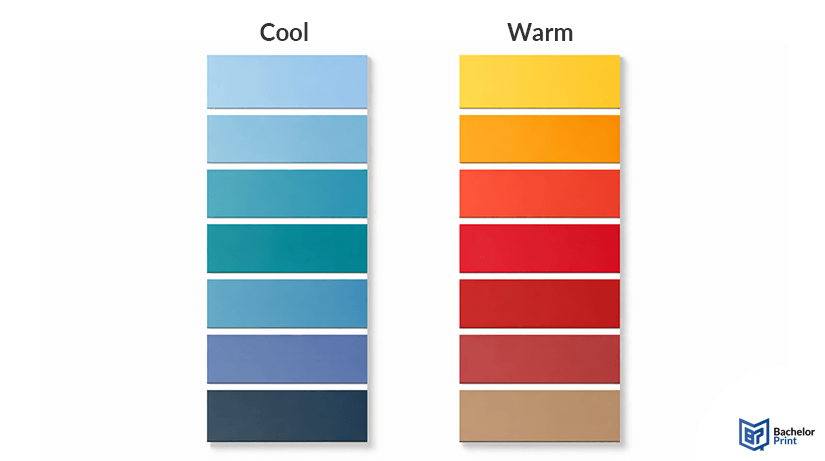
Color tones can be categorized by their temperature, which influences how a design feels emotionally and how it is perceived. Choosing the right tone temperature helps align a product with its intended message.
Tone temperature
Examples
Associations
Use cases in print design
Warm tones
Cool tones
Tone vs. tint vs. shade
Although they are often confused, tint, shade, and tone describe three distinct ways of modifying a base hue. Each method changes a color differently and leads to a different visual effect:
Tint: Hue + white
➜ Creates a lighter, brighter version of the original color
Shade: Hue + black
➜ Produces a darker, deeper version of the original hue
Tone: Hue + gray
➜ Reduces intensity while keeping the color balanced and muted
If you want to explore each concept in more detail, you can read the dedicated guides on color tint and color shade, which explain their characteristics and applications in depth.
Common uses
Color tones are widely used whenever a design calls for subtlety, realism, or visual balance rather than strong contrast. By reducing the intensity of a hue, tones help create natural-looking and harmonious compositions.
Skin tones
Artists create realistic skin tones by mixing base hues with gray and other neutral colors. This approach captures the subtle variations found in human skin more accurately than using highly saturated colors.
Soft shadows
Tones are often used to produce soft, natural-looking shadows. Compared to shadows created by simply adding black, toned shadows appear less harsh and blend more smoothly into surrounding colors.
Monochromatic schemes
Designers frequently combine different tints, shades, and tones of a single hue to build cohesive designs with low contrast. Tones play a key role here by adding depth without overpowering the overall visual balance.
Color tones in print design
In print design, using color tones is a strategic choice that helps translate digital concepts into professional, reliable physical products. While highly saturated colors can look striking on screen, they often lose impact or accuracy when printed. Tones, with their muted and balanced character, are generally more predictable and better suited to real-world printing conditions.
Why color tones are useful in print
- Professionalism and trust
Unlike vivid or “loud” colors, toned-down hues convey sophistication, calmness, and reliability. This makes them especially suitable for branding elements and high-stakes documents where clarity and authority matter.
- Reliability in CMYK
Most printing processes rely on the CMYK color model, which has a smaller color gamut than the RGB light used by screens. Color tones typically autumn well within this printable range, meaning the final result is more likely to match the intended design. In contrast, very bright or neon colors often appear noticeably duller once converted to ink.
- Enhanced readability
Toned backgrounds offer sufficient contrast for text without the visual strain caused by pure white or highly saturated colors. This is particularly important for long-form reading in academic, corporate, and informational print products.
Preferred applications
Color tones are especially effective in print projects where balance and restraint are required.
Project type
Why tones work best
Academic covers
They communicate maturity and focus, allowing the title and author’s name to remain the primary visual elements.
Only using tones instead of pure hues prevents the design from looking flat while maintaining a clean aesthetic.
Tones create a premium, trustworthy feel that suggests quality and stability without overwhelming the reader.
Tone gap in screen vs. print
One of the main challenges in print design is the difference between emitted light and reflected light. Screens emit light, while paper reflects it.
- On screen, tones appear slightly more vibrant due to the monitor’s backlighting.
- On paper, the same tone looks darker/softer because the paper absorbs some of the light.
Note: Coated paper reflects more light and helps preserve tone vibrancy, whereas uncoated paper absorbs more ink and further mutes colors.
To achieve consistent results, designers often rely on standardized tools such as the Pantone color system or switch their design settings to CMYK early in the workflow to better preview the final printed tone.
High-quality color copies from just CA$0.25
- Choose from different paper formats & paper weights
- Configure finishing options & add any extras you need
- Easy online ordering process with delivery to your doorstep
Learn more!
FAQs
A color tone is created by mixing a hue with gray. This reduces the color’s intensity and results in a more muted, balanced appearance.
Neither is inherently better. Warm tones feel inviting and natural, while cool tones appear more professional and calm. The best choice depends on the purpose of the printed product.
In color theory, tone refers to a hue that has been neutralized with gray, lowering its saturation without simply making it lighter or darker.
Examples include:
- Beige
- Blue-gray
- Muted olive
- Soft brick red
