
In the world of printing and books, a dog ear doesn’t describe the cute appendages on top of a dog’s head but rather a small folded triangle at the corner of a page. This fold can occur intentionally or unintentionally. Meanwhile, readers across the internet are divided over whether it’s ever acceptable to dog-ear a book. We won’t settle that debate but we’ll walk you through its history, why people do it, and more.
Dog ear explained briefly
A dog ear is a folded page corner used as a bookmark or a crease defect in printed paper.
Definition: Dog ear
A dog ear refers to the small folded triangle at the corner of a page, created either deliberately to mark a spot or unintentionally through handling. The name comes from the shape, which resembles a dog’s floppy ear. In the context of printing terms, a dog ear also describes an unwanted fold or crease that can appear during printing, binding, or packaging processes. Beyond books, the same effect can occur on paper documents, photographs, and even printed proofs, where precision and clean edges are essential.
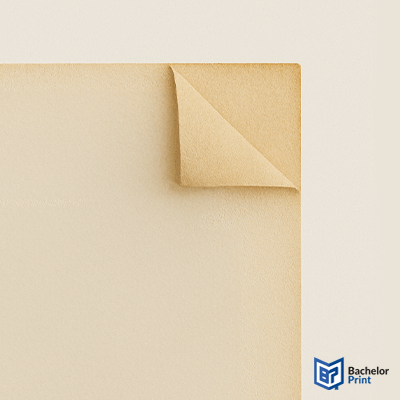
Origin & historical background
From its linguistic roots to its role in printing and reading culture, the story of the dog ear spans centuries.
The term has been used in English since the 17th century. One of the earliest known references appears in William Hawkins’ 1627 work Apollo Shroving, where he mentions “dogs eares” in the context of worn or creased pages. By the 18th century, the term had become common in both spoken and printed English.
“For one whole yeere thou must smooth out the dogs eares of all thy fellowes bookes.”
Around the same full stop, the idea appeared elsewhere in Europe. In Germany, readers spoke of an Eselsohr, literally a “donkey’s ear.” The poet Andreas Gryphius mentioned it in the 17th century, and the Brothers Grimm later recorded it in their Deutsches Wörterbuch (1854) as “a mark in a read book made by bending a corner of the page.”
Although Johannes Gutenberg’s letterpress printing technique had been widespread since the 15th century, books were still costly in the 1600s. Reading remained a privilege of the educated elite, yet even some wealthy owners were known to bend the corners of their precious pages to mark their place.
In the early days of traditional bookbinding, pages were hand-cut and folded, making them more prone to bending and creasing. Folding down a corner to mark one’s place was an easy habit for readers long before bookmarks became widespread. However, as books became more affordable and reading habits evolved, dog-earing shifted from a sign of active reading to one of poor book care.
Today, even on events like World Book Day, the dog ear still sparks debate: for some, it’s a personal touch, for others, a flaw that damages paper fibers. And in a nod to print culture, many e-readers now include digital dog-ears, a tiny on-screen fold that pays tribute to centuries of reading tradition.
Paperback with your individual design
- Individual design for thesis, dissertation, or books
- Order online with fast delivery right to your doorstep
- Use a customizable pre-made design or create your own
Learn more!
How & why people dog-ear pages
Dog-earing a page is one of the simplest ways readers interact with a book. Some do it instinctively to mark their place or highlight a passage they want to revisit. Others see it as a small act of ownership, a physical trace of their reading journey.
Common reasons for dog-earing include:
- Saving favourite quotes or key passages for later
- Quickly marking a page when no bookmark is at hand
- Creating a visual cue for important sections while studying
Beyond practicality, there’s also a psychological aspect. Folding a page corner can make reading feel more personal, as if the book carries the reader’s memories and emotions. Each fold becomes a quiet reminder of moments of focus, discovery, or reflection.
For those who prefer to keep their books in pristine condition, there are alternatives:
- Sticky notes or coloured page flags
- Traditional or magnetic bookmarks
- Digital highlights and annotation tools in e-readers
Note: Dog ears may feel personal but they can damage the fibers of the paper over time, especially in older editions.
In printing & paper handling
In the printing world, a “dog ear” can also refer to a folded or creased corner that occurs accidentally during printing, binding, or packaging. These small defects can impact the professional appearance of a printed product and are often detected during quality control.
Common causes
- Humidity or static buildup in paper stacks
- Paper misalignment in folding or cutting machines
- Mechanical feeding issues or roller pressure issues
Prevention and maintenance
- Regular machine calibration and maintenance
- Manual inspection during each production stage
- Using proper paper weight and controlling humidity in storage areas
Summary
Cause
Effect on print
How to avoid
Humidity
Paper curls, corners fold
Store paper flat and dry
Manual handling
Bent edges
Use gloves or corner guards
Machine misfeed
Creased corners
Adjust feeding rollers
Note: Even minor dog ears can make a product appear less professional. At BachelorPrint, we make sure your pages stay flawless through careful handling and regular quality checks.
Preservation & aesthetic perspective
Dog-eared pages often divide opinions.
For many readers, they’re a sign of a well-loved book, a visual record of moments spent reading, studying, or revisiting favourite lines. Each folded corner becomes part of the book’s story, showing which pages mattered most. Some readers even feel that a slightly worn book carries more personality and history than a pristine one.
For libraries, archivists, and collectors, however, dog ears are viewed very differently. Repeated folding weakens paper fibers, leading to small tears, discoloration, or even missing corners over time. In rare or fragile editions, even small folds can permanently affect a book’s condition and value. That’s why most preservation experts discourage the habit and recommend using acid-free bookmarks or other non-invasive marking methods instead.
Note: The “page-fold” icon in e-book apps and digital PDFs is inspired by the classic dog ear.
Digital equivalent
Despite the concerns, the dog ear continues to appear in modern design. Graphic designers and publishers sometimes use dog-ear motifs in layouts, posters, or digital icons to mimic the look of a turned page.
Many e-readers and PDF readers also include virtual bookmarks or even small digital “folds” in the corner of the screen. With just a tap, readers can save their place or highlight a passage.
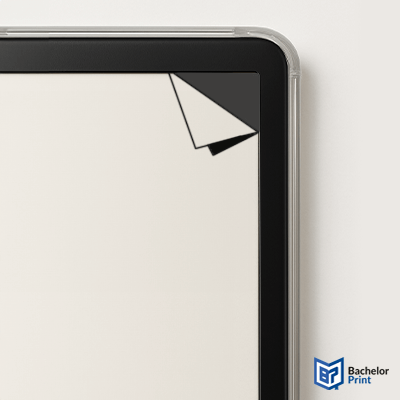
Still, the tactile act of physically folding a page corner holds a certain emotional weight. For some, it’s a small but meaningful gesture. While digital tools can imitate the function of a dog ear, they can’t fully replace the sensory link between reader, paper, and story.
➜ It’s a subtle way to evoke nostalgia and pay homage to traditional reading,
even in digital formats.
PDF printing at BachelorPrint from £0.08
- Upload your files & order printed PDFs in minutes
- Secure online PDF printing service with reliable delivery
- High-quality prints from any PDF, including reports & more
Learn more!
FAQs
It depends on personal preference. Some readers see dog-earing as a quick and harmless way to mark a page, while others prefer to keep books in perfect condition.
- For everyday reading copies, probably not.
- But for collectors, libraries, or anyone valuing pristine condition, dog ears can lower a book’s quality rating and resale value.
- In rare and antique editions, even small folds are seen as damage.
It means you fold down the corner of a page. The name comes from the resemblance to a dog’s floppy ears.
This phrase describes a book that’s been well used or read many times, with folded corners, worn edges, or creased pages.
